
RSS

5 Interior Design Hacks for Small Spaces

The growing popularity of more compact living quarters, due in part to both rising housing costs and densification, has many people searching for interior design hacks for small living spaces.

When designing a small space, it’s important to include details that align with your habits and routines. Other designs might look great in magazines or on Pinterest, but this is your home. It’s crucial to harness your creativity when designing a cozy space that is functional, comfortable and reflects both your lifestyle and personality.

Below, we have outlined five tips and tricks to help you maximize space without compromising on style.

1. Avoid visual line breaks

Whether you decide to opt for a bright and airy room with whites or neutrals, or go big with a bold colour palette, avoid visual line breaks on the interior walls of the space. 

A visual line break is any separation or disruption to the design elements of the room. It is important to avoid these line breaks in smaller spaces because it can make a room feel confined or cluttered. 

To do this, try painting the trim, walls and doors in the same colour, and if using an area rug, choose a colour that is similar to the colour of the flooring. This creates a cohesive flowy feeling to the room, allowing for certain furniture pieces to shine, easily becoming focal points in the room without any visual distractions.

2. Utilize vertical space

When designing a room or home with minimal square footage, a simple way to expand the area is to utilize vertical space. 

In the kitchen, a few great uses of vertical space could be:

  • Adding shelving to bare walls or underneath cabinets

  • Installing a magnetic strip to the backsplash for knives and spices

  • Hanging pots and pans above a kitchen island or on the wall

In a living room or bedroom, use open shelving to display books and trinkets. You can also utilize the space on your walls to bring the outside in with house plants.

Lastly, hanging a wall mirror can create the illusion of an open, spacious room. Choose a mirror with a smaller frame (remember, the less visual line breaks on the walls, the better) and ideally place it opposite of an outside window to reflect natural light. 
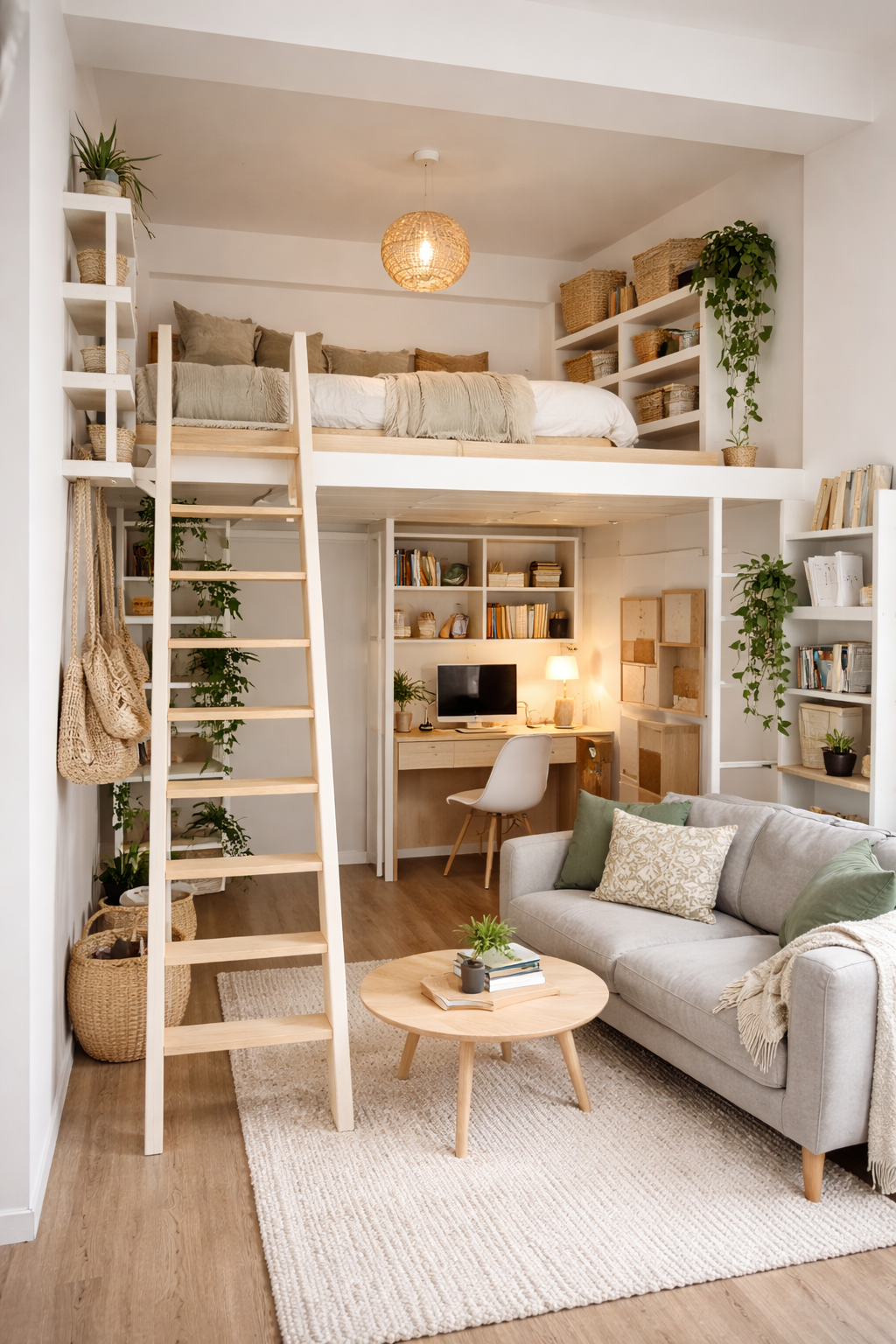
3. Choose furniture wisely

Selecting pieces that reflect your aesthetic is a great way to bring character into your home . Whether you’re choosing calming neutrals, or making a statement with colourful fabrics and finishes, the size of the furniture is most important. 

Always measure your space before purchasing any furniture, and draw up a diagram of the room you are furnishing. Create multiple layout options to find the best layout for your interiors, being mindful to leave enough space around each piece so that they don’t touch each other or the walls – another hack to make a room feel larger than it is. 

Opting for low profile furniture will contribute to a sense of openness in the room. Furniture that is closer to the ground can give a room an airer feel.

Finally, getting playful with colours and textures is a great way to bring big personality into a small space. Selecting unique fabrics and finishes can turn an ordinary piece of furniture into art or at the very least, a conversation piece.  


4. Be smart about lighting

Being intentional with the lighting you choose to adorn your petite abode with can make or break the overall feel of your space. 

Create a focal point in a room with a pendant light or semi-flush fixture. There are many options available to suit your style, from simple and modern to industrial or even vintage. 

If you don’t have room for end tables or nightstands, adding surface lamps will be difficult. Instead, choose a floor lamp where space allows, or add wall sconces or hanging lights.

Bonus tip: Add dimmer switches to your lights to easily adjust the mood without the use of multiple light fixtures.

5. Implement storage solutions

In a compact living environment, creating storage solutions is essential to maximize space and create order in your home. 

Adequate storage allows for every square inch of space to be used efficiently, allowing for a more functional, usable home. Making the most out of vertical space is a great place to start. 

Here are a few other space-saving storage solutions for your kitchen, bedroom, living room and other areas of your home: 

  • Add hooks, shelving and drawers to the inside of existing cabinets 

  • Explore multi-functional pieces when selecting furniture, like sofas or bed frames with drawers underneath, benches with hidden storage, or wall-mounted desks or tables that fold down when not in use

  • Select stylish storage containers and bins that match the aesthetic of your home to be placed on shelves or under coffee tables 

By applying these strategies, you’ll be able to transform compact living environments into inviting and personalized spaces that meet your unique needs and style. 

Written by Michelle McNally, Royal LePage Senior Manager, Research and Communications

Read

5 Reasons You Need a REALTOR® On Your Team When Buying a Home

The prospect of buying a new home is exciting, but today’s real estate markets come with their fair share of challenges. With the increased cost of living and a shortage of supply, navigating the path to homeownership can feel overwhelming. Securing a mortgage is tougher, competition for homes can be fierce, and the entire process—one of life’s biggest decisions—has become even more complex.

In this environment, having a REALTOR® by your side is not just helpful—it’s indispensable. Your REALTOR® acts as your guide, advocate and expert, helping you navigate your market with confidence and clarity. From understanding the realities of today’s real estate market to helping negotiate the best deal, they’re with you every step of the way to ensure you’re making smart, informed decisions, and achieving your homeownership goals.

Here are five reasons you need a REALTOR® on your team when buying a home:

1. Your REALTOR® helps you define your goals and stay on track.

Buying a home starts with setting clear goals. A REALTOR® begins the process by thoroughly understanding your needs, lifestyle, and financial situation. Whether it’s your first home or your next big move, they’ll help you establish realistic expectations and make decisions to fit your budget and aspirations.

A strong start ensures you stay grounded and avoid potential pitfalls like emotional overspending or pursuing the wrong property. Your REALTOR® acts as your sounding board, helping you prioritize what matters most and guiding you to a home that aligns with your vision of homeownership.

2. Your REALTOR® provides expert insights and clarity.

From fluctuating prices to neighbourhood trends and competitive listings, it’s easy to get overwhelmed. A REALTOR® can help you cut through the noise.

As market experts, REALTORS® provide tailored insights and bring clarity to the home buying process. They can:

  • help you assess the fair market value of properties;

  • offer expert advice on neighbourhoods, schools, amenities, and future resale potential; and

  • uncover opportunities to match your unique needs, including homes you may not have considered.

With a REALTOR® by your side, you gain access to reliable, data-driven advice, giving you confidence that you’re making an informed investment.

3. Your REALTOR® can help protect you from hidden risks and challenges.

A home may look perfect at first glance, but what about the hidden issues or risks? REALTORS® have the experience and trained eye to help you spot some major red flags, such as structural concerns, outdated systems, or other potential problems. They can connect you with trusted professionals, like home inspectors or legal experts, and work with you to ensure you have as much information about a property’s condition as possible before putting in an offer.

The home buying process is also full of unexpected challenges, from bidding wars to last-minute changes. Your REALTOR® often anticipates these hurdles and can guide you through them with expertise, keeping you on track to reach your goals.

4. Your REALTOR® is your advocate during negotiations.

Negotiating a home purchase can be intense and stressful, especially in competitive markets. This is where your REALTOR® shines. They’re skilled negotiators who are working to protect your interests, ensuring you get the best price and terms possible.

From crafting a strong offer to managing counteroffers and conditions, REALTORS® have the strategic know-how to help navigate tricky negotiations. Their objective and expert perspective can help you stay calm and focused while securing the best possible outcome.

Think of your REALTOR® as your champion—someone who has your back, representing your best interests every step of the way.

5. Your REALTOR® helps coordinate the closing process.

The final stage of buying a home—closing—is often the most complex. It involves a maze of legal paperwork, financial details, and critical deadlines. Your REALTOR® helps ensure no detail is overlooked, and you understand and can navigate this intricate process with certainty.

They coordinate with lawyers, lenders, and other parties involved to ensure a seamless transaction. By safeguarding your investment and providing meticulous oversight, your REALTOR® helps give you peace of mind as you reach the finish line of the home buying process.

BONUS: your REALTOR® is your trusted partner.

Buying a home is exciting, but it’s also demanding—financially, emotionally, and logistically. Your REALTOR® is dedicated to making the process as smooth, stress-free, and rewarding as possible. Whether they’re negotiating on your behalf, fielding late-night calls, or hustling to arrange a last-minute home tour, REALTORS® go the extra mile for their clients.

Did you know? Not every real estate agent is a REALTOR®. REALTORS® are members of the Canadian Real Estate Association (CREA) and adhere to a strict Code of Ethics that protects clients, the public, and other REALTORS®. This commitment to professionalism and integrity sets them apart, ensuring you receive competent, professional, reliable service every time.

Ready to take the first step toward homeownership? Call Sarah Toigo & Associates today to take the next step in finding your dream home.  


Read

School Spotlight:  Delta School District

Our schools and District offices reside on the traditional territories of the Tsawwassen First Nation (TFN) and Musqueam Indian Band. The district offers its respect to the Knowledge Keepers and all First Peoples who have been on these lands since time immemorial.

Delta encompasses 180 square kilometres bordered by the Fraser River on the north, the United States border and Boundary Bay on the south, the City of Surrey on the east and the Strait of Georgia on the west. It encompasses the thriving communities of Ladner, North Delta, Tsawwassen and TFN.

The Delta School District has 24 Elementary Schools and 7 Secondary schools, and services more than 16,000 students. Approximately 600 students identify as having Indigenous ancestry and more than 1,100 students with disabilities or diverse abilities that require varying levels of support. The district employs more than 2,500 staff.

We are proud to provide safe, culturally diverse, and nurturing learning environments from kindergarten through Grade 12 to meet unique learning needs. The district offers a wide variety of quality programs including International Baccalaureate, French Immersion programs, Distributed Learning programs (Home Quest and Delta Access), traditional schools, a world-class International Student Program, and a wide range of continuing education programs (Delta Community College) to engage students in stimulating and relevant educational experiences. In addition, our dedication to social responsibility teaches our students to respect themselves, their environment and each other, and encourages them to find ways to give back to their local communities.

In the Delta School District, our entire community is working hard to become the best district we can be. We have collaborated to identify a vision that we are committed to achieving. By 2030, the Delta School District will be ‘an innovative, inclusive community where all learners belong and everyone soars.’

For more information on the Delta School District and the specific offerings, please click here.

Read

Lawn Love: How to Grow (and Keep) a Beautiful Yard

A lush, healthy lawn does more than improve curb appeal – it creates a space for relaxation, play, and connection. Whether you’re starting from scratch or reviving patchy grass, the key to lawn success is consistent care rooted in smart, seasonal decisions. From soil prep to watering, mowing, and fertilizing, this guide walks you through the essentials of lawn maintenance in Canada for every yard size and condition.

Start with the soil

Healthy grass starts below the surface. Begin by clearing away dead leaves, branches, and leftover clippings. If your lawn feels uneven or compacted, lightly rake and level out bumps.

Aeration is essential, especially in high-traffic zones or areas where water tends to pool. Aerating loosens the soil and allows oxygen, water, and nutrients to reach the roots, setting the foundation for strong growth.

Seed strategically

If your lawn looks thin or patchy, overseeding is a smart move. The best time for most Canadian climates is early fall, when conditions are cool, moist, and free from weed competition.

  • Choose a grass seed mix suited to your region and sunlight exposure.

  • Keep newly seeded areas evenly moist – not soggy – for several weeks.

  • Morning watering is best to reduce evaporation and disease risk.

Water wisely

Let your lawn tell you when it’s thirsty. Instead of watering on a strict schedule, watch for signs of dryness: blades that curl, turn bluish-grey, or don’t spring back after being walked on. Water your lawn deeply and in the morning to reduce evaporation and give roots time to absorb moisture before the heat sets in. Always aim for about one inch of water per week, depending on your grass type and local rainfall. 

Sprinkler systems or timed irrigation can help you water efficiently, saving both water and money, especially if your system is set up to target areas evenly and avoids run-off.

Fertilize with intention

Feeding your lawn properly helps it grow thick and vibrant.

  • Look for slow-release fertilizers or step-based programs that feed over time instead of giving your lawn a sugar rush.

  • If you’re sowing new grass, use a starter fertilizer that supports root growth and avoid using spreaders with hollow wheels, as they can leave ruts that disrupt seedlings.

  • Over-fertilizing can scorch your lawn. Under-fertilizing leads to weak growth. The key is consistency and even application.

Mow with care

Cutting grass seems simple, but doing it wrong can do more harm than good.

  • Never cut wet grass – it tears more easily and can clog your mower.

  • Stick to the one-third rule: never cut off more than a third of the blade height. Ideally, mow when your grass is about four inches tall, cutting it back to three inches. This helps protect roots from sun damage and discourages weed growth.

  • Keep mower blades sharp – dull blades rip the grass instead of slicing cleanly, which can lead to disease.

  • Switch up your mowing pattern regularly to prevent soil compaction and ruts.

  • Don’t scalp your lawn (cutting grass too short) in the hopes of mowing less – it shocks the plant and invites weeds.

Tidy the edges

Clean, crisp edges make a world of difference. Use a trimmer or edger along walkways, driveways, and garden beds. Not only does this make your lawn look professionally maintained, it prevents overgrowth from creeping into unwanted areas.

Watch for trouble

Brown patches can pop up even in a well-tended lawn.

  • It could be dormancy. Grass will naturally go brown to conserve energy during extreme heat or drought. If it springs back after rain or watering, there’s no need to panic.

  • Other culprits include fungal disease, pet urine, or poor drainage. Inspect the soil, remove any thatch buildup, and adjust watering habits if needed.

  • Weeds? Spot-treat with a selective herbicide (not a total vegetation killer), and be careful not to overapply.

Final Thoughts

Lawn care doesn’t have to be overwhelming. Think of it like tending to any living thing: with the right foundation, consistency, and a willingness to observe and adapt, your lawn can become one of your home’s happiest features. Take the time to understand what it needs, season to season.

Written by Michelle McNally, Royal LePage Senior Manager, Research and Communications

Read

Is Your Home Still “The One"?”

How to Decide Between Renovation and Relocating.

At first, your home may have felt like true love – the perfect match, full of excitement and possibility. But as time goes on, the honeymoon phase can fade. Maybe you’re craving more space, a shorter commute to work or school, or modern features that other homes seem to have. If you’re feeling restless, you might be wondering, “Is it time for a fresh start, or can this relationship be saved with a little TLC?”

Deciding whether to move to a new home or renovate the one you’ve got is no small decision — it’s a mix of emotions, finances, and practicality all rolled into one. Think of it like the HGTV classic Love It or List It: weighing the pros and cons of both options to figure out what truly fits your family and lifestyle. 

This guide will help you determine if your home is still “the one” or if it’s time to move on.

Top reasons to renovate your home

If you love your neighbourhood, have sentimental attachments to your home, or see potential in upgrading your space, renovating might be the better option. Here’s when improving makes sense:

1. Your home has good bones

If your home is structurally sound and doesn’t require major foundational work, a renovation could be a cost-effective way to address your needs. Open up your floor plan, update outdated features, or add square footage to create a home that feels brand new.

2. You love your location

If your home is in a desirable neighbourhood, close to work, or within a top school district, improving your home allows you to enjoy these benefits while adapting your space to meet your needs.

3. Renovations increase value

Consider renovations that will add significant value to your property. Projects like modernizing the kitchen, updating bathrooms, or adding energy-efficient upgrades often provide a good return on investment.

4. Moving costs are prohibitive

Between realtor fees, closing costs, and moving expenses, relocating can be expensive. If your renovation budget is less than the cost of moving, it might make more financial sense to stay put.

Top reasons to move to a new home

Sometimes, no amount of renovation can fix a home that no longer suits your lifestyle. Here’s when moving to a new property may be the better option:

1. Space is limited

If your family has outgrown your current home and there’s no room to expand, or zoning restrictions make it impossible to do so, moving to a larger property may be the best solution.

2. Your needs have changed

Life changes – like a growing family, a new job, or aging parents moving in – may make your current home impractical. In these cases, finding a home that meets your new needs can be more effective than extensive renovations.

3. Renovations are too costly

If the renovations required to make your home suitable are extensive and expensive, the ROI might not justify the investment. In this case moving may be more cost-effective.

4. You’re ready for a change

Sometimes, the desire for a fresh start or a completely different style of home outweighs the convenience of staying. If you’re feeling uninspired or constrained in your current home, it might be time to explore new options.

Key questions to help you decide whether to renovate or relocate

Still stuck between renovating and relocating? Here are a few crucial questions to ask yourself to find an answer. 

1. What’s my budget? Compare the costs of renovating versus moving. Don’t forget to factor in hidden costs like permits, temporary housing, or realtor fees.

2. How disruptive will renovations be? Living through major renovations can be stressful and time-consuming. Consider whether you have the time and patience for the process.

3. Will I get the features I want? If your renovation can’t deliver your dream home, moving may be the better choice.

4. How long do I plan to stay? If you plan to stay in your current home for many years, renovations could be a worthwhile investment. If not, moving might make more sense.

How we can support your decision

The choice between moving and improving is deeply personal and depends on your unique situation. By evaluating your needs, budget, and long-term goals, you can make a decision that works best for you and your family. 

Whether you decide to renovate or relocate, having the right team on your side makes all the difference. Sarah Toigo & Associates specialize in helping homeowners navigate these pivotal decisions. From finding trusted contractors to discovering your dream home, we’re here to guide you every step of the way.  Call us today to discuss your options!

Written by Michelle McNally, Royal LePage Senior Manager, Research and Communications

Read

Transform Your Laundry Room: A Renovation Guide

A well-designed laundry room is more than a luxury, it’s a game-changer for modern homes. Whether you’re looking to maximize efficiency, enhance aesthetics, or add functionality, renovating your laundry space can make a big impact. Here’s how to turn your laundry room into a space you’ll actually enjoy using.

Plan your layout with purpose

The layout is the foundation of any laundry room redesign. Start by analyzing your space and determining the best placement for appliances and work areas.

  • Stack or side-by-side appliances: If space is limited, consider stacking your washer and dryer to free up floor space. If you prefer side-by-side machines, use the top as a countertop for folding laundry.

  • Accessibility: Make sure your appliances are close to water, electrical, and venting connections. Place frequently used items, like detergents, within arm’s reach to make your routine more efficient.

Pro Tip: A compact layout doesn’t mean compromising functionality. Condo-sized machines are perfect for tight spaces and still get the job done.

Elevate storage and organization

A clutter-free laundry room is more functional and visually appealing. Incorporate smart storage solutions to keep everything organized.

  • Cabinets and shelves: Install cabinets or floating shelves to store detergents, cleaning supplies, and linens.

  • Hooks and wall storage: Use wall-mounted hooks or racks to hang brooms, mops, and ironing boards. This will free up floor space while keeping essentials easily accessible.

  • Laundry basket storage: Dedicate a spot for baskets or hampers, like under a counter or on open shelving.

Pro Tip: Label shelves or bins to maintain an organized system that works for the whole family.

Add functional workspaces

Having a work surface in your laundry room can make tasks like sorting, folding, and treating stains a lot easier.

  • Countertops: Install a countertop over side-by-side machines for an instant workspace. Choose durable materials like quartz that can withstand wear and tear.

  • Drying racks: Add a retractable drying rack or a rod for hang-drying clothes. This saves space and keeps damp clothes off your furniture.

Pro Tip: Include a deep utility sink for hand-washing delicate items or tackling messy stains.

Choose durable and stylish materials

Your laundry room needs to stand up to frequent use and potential spills. Opt for materials that are easy to clean and maintain while adding style.

  • Flooring: Go for water-resistant options like ceramic tile, porcelain, or luxury vinyl.

  • Countertops: Non-porous surfaces like quartz are heat and stain-resistant, perfect for a hardworking space.

  • Cabinets: Melamine is a durable and affordable option for cabinetry. Choose flat finishes that are easy to wipe down.

Pro Tip: Incorporate materials that match your home’s overall aesthetic for a cohesive look.

Maximize small spaces with clever design

If your laundry room is on the smaller side, use these design tricks to make it feel more spacious.

  • Pocket doors: Swap out a traditional door for a pocket door to save valuable wall space.

  • Vertical storage: Utilize wall height by installing tall cabinets or shelving.

  • Bright colours: Paint the walls in light, bright colours like crisp white or soft pastels to create the illusion of a larger space.

Pro Tip: Use reflective materials, like glossy tiles, to bounce light around the room.

Brighten the room with lighting

Good lighting can make a world of difference in a laundry room.

  • Overhead task lighting: Install bright, even lighting to ensure you can see clearly when sorting and folding.

  • Under-cabinet lights: Add task lighting under shelves or cabinets to illuminate work surfaces.

Pro Tip: If your laundry room lacks natural light, choose daylight-mimicking bulbs to brighten the space.

Final touches: Style meets functionality

Don’t forget to add a personal touch to your newly redesigned laundry room. A stylish backsplash, decorative baskets, or framed art can make the space feel welcoming.

Renovating your laundry room is an investment in both functionality and aesthetics. By focusing on layout, storage, and materials, you can create a space that works as hard as you do, and looks great while doing it. 

Written by Michelle McNally, Royal LePage Senior Manager, Research and Communications

Read

Blissful Bites: Four Winds Beach House & Brewery

Four Winds Beach House & Brewery offers a west coast take on the classic beer hall. We’re excited to celebrate both traditional and modern brewing methods, paired with exceptional hospitality and memorable dining experiences.

Tsawwassen, where we grew up and now raise our families, is dear to us. Joining the Southlands development—a unique “agri-hood” with 530 acres of farmland, green spaces, a growing neighbourhood and a bustling market square, is a dream come true. Located just a short stroll from one of the Lower Mainland’s most beautiful beaches, Four Winds Beach House & Brewery is a destination worth exploring. 

We look forward to welcoming you to the Beach House!

Location:
6350 Market Avenue
Delta BC, V4L 0B1
‌

Restaurant Hours of Operation:
Closed on Mondays until Mid-May (open Easter Monday 11 am-9 pm)
11:00 am - 9:00 pm Tues to Thurs
11:00 am - 10:00 pm Fri & Sat
11:00 am - 9:00 pm Sun

Phone: (604) 940-2985
General Inquiries: southlands@fourwindsbrewing.ca

For more information on the Four Winds Beach House and Brewery, click here.

Read

Weird Smells? Here’s How to Get Rid of Weird Odours In Your Home

Unwanted smells turn many buyers off during a home showing, but for some, the dream of owning the right property outweighs the temporary inconvenience of lingering odours. If you’ve bought a new home and are now dealing with stubborn smells, don’t worry – it’s possible to get rid of them. With these simple cleaning methods, you can breathe new life into your living space.

Here are a few common household odours that might be haunting your home (and how to eliminate them):

Musty or mouldy smells

These smells often come from high humidity, water damage, or hidden mould growth. Start by inspecting your home for leaks or damp areas, especially in basements, bathrooms, and under sinks. Address any issues promptly to prevent further damage. Cleaning visible mould with a vinegar solution or a mould-specific cleaner can help, while a dehumidifier can reduce moisture levels in the affected area. 

If the smell persists or mould is widespread, it’s best to call in a professional to assess the situation. Mould can cause various health issues, from sneezing and coughing to shortness of breath and rash breakouts, so it’s best to let the professionals step in if the mould area is large.

Cigarette smoke

Cigarette smoke residue can cling to walls, ceilings, and carpets, leaving a persistent odour. To combat this, wash surfaces with a mixture of vinegar and water, or a baking soda solution. Repainting walls with an odour-sealing primer is a great next step. Deep clean or replace carpets and upholstery to fully remove the smell.

Pet odours

Dander, fur, drool and oils trapped in carpets and furniture are common sources of pet odours. Deodorizing with baking soda and vinegar, followed by steam-cleaning carpets and upholstery, are a great place to start. Don’t forget to clean or replace air filters to ensure that the air circulating in your home is fresh. For stubborn pet odours, a professional cleaning service may be the most effective solution.

For urine smells, enzyme-based cleaners are highly effective for breaking down the proteins in urine and neutralizing the odour. Older or particularly stubborn stains that may have seeped into the padding beneath your flooring may require replacing the affected area in order to fully resolve the issue. 

Steam cleaners should not be used to clean urine stains on carpets or upholstery. The heat can cause the stain and odour to set permanently. Similarly, avoid using cleaning agents like ammonia or vinegar, as their strong smells may prompt your pet (if you have one) to re-mark the area.

Sewer or rotten egg smell

This unpleasant odour is often caused by dry plumbing traps, blocked vents, or sulphur in your water supply. Running the tap in seldom-used sinks or showers can refill dry traps, while cleaning drains with baking soda and vinegar followed by hot water may also help. If the smell persists, it’s a good idea to contact a plumber to investigate further. 

In some cases, this smell could indicate a gas leak. Natural gas, which is odourless, is often treated with a sulphur-like chemical called mercaptan to help people detect a leak. If you suspect a gas leak, leave your home immediately and avoid using electrical switches or open flames. Once you’re safely outside, contact your gas provider or emergency services to investigate and resolve the issue.

From a house to a home

If the cleaning methods listed above aren’t quite enough to get rid of stubborn smells, don’t hesitate to call in professional help. Getting rid of lingering odours in a new place isn’t just about the smell – it’s about reclaiming the space as your own. Once the smells have been properly dealt with, you can truly feel comfortable in a house that is now your home.

Written by Michelle McNally, Royal LePage Senior Manager, Research and Communications

Read

Tips for Re-Opening Your Cottage This Spring

The arrival of warmer weather and longer days is a welcome sign for many Canadians – especially those eager to return to their cottages. With the Victoria Day long weekend fast approaching (often seen as the unofficial start of summer), thousands are preparing to unlock the cabin doors and breathe new life into their seasonal properties.

But before you can fully relax at the lakeside, there’s a bit of work to be done. If your cottage was unoccupied during the winter months, it’s important to give it the care and attention it needs to ensure a safe and comfortable season ahead.

Here are a few helpful tips to make reopening your cottage as smooth as possible. 

Start the reopening process before you arrive

A successful cottage reopening starts before you even set foot on the property. In the weeks leading up to your trip, take time to reconnect with service providers and double-check key maintenance items.

Contact your utility companies to reinstate services like electricity, internet, propane and gas. If you paused trash collection or water delivery, now’s the time to get those back in motion. Schedule a chimney sweep and, if your property has a septic tank or outhouse, book a cleaning or inspection to make sure everything’s functioning safely.

Also take a moment to review your cottage insurance policy, as well as coverage for boats, trailers or recreational vehicles. Make sure everything is up to date before opening weekend.

Don’t forget to pack your reopening essentials: keys, tools, cleaning supplies, flashlights, batteries, light bulbs, and even pest control products can save you an unexpected trip into town.

Take a walk around the property

Upon arrival, do a thorough walk about your lot to look for signs of weather damage. Inspect the roof for missing shingles, blocked gutters, leaks or any branches that may have fallen during the winter. On the ground, keep an eye out for signs of rot on your deck or siding, broken windows or wildlife that may have made their way indoors during the winter. 

Once inside, inspect your cottage for dampness, pests or unpleasant odours. Get some fresh air running through your cottage and flush out any stale smells by opening all of the windows and doors. This is also a good opportunity to look for any mould or mildew that may be lurking around window sills and entryways. If there is any serious damage to the property, be sure to alert your insurance provider immediately.

Safely restore water and power

When your initial inspection is complete, it’s time to restore your essential utilities.

For water, start by checking that pipes are intact and free of cracks caused by freezing. Reconnect any pipes that were disconnected in the fall, then proceed to fill your water heater and replace filters if needed. Once the main water valve is turned on, allow water to run through a tap to flush the lines.

Keep in mind: some cottages rely on lake-drawn water or well systems, which may require extra care or professional servicing.

Before flipping on the power, inspect your electrical meter and exterior power lines for signs of damage. Once you’re in the clear, turn on the main breaker and test appliances, outlets and lights room by room to make sure everything is running smoothly.

Get your outdoor spaces summer-ready

Don’t forget to give your exterior living spaces some love. After months of snow, your yard, dock, and deck will likely need some cleanup before they’re ready for prime time.

Rake up fallen branches, leaves and debris from your lawn and garden beds. Trim overgrown shrubs and inspect trees for hanging limbs that could pose a safety risk. Check your dock for loose boards, exposed nails or signs of water damage, and make necessary repairs before jumping in.

Wipe down your outdoor furniture and inspect it for rust or wear. Bring out your BBQ or firepit, giving them a proper cleaning before use. If you store kayaks, paddleboards or canoes on-site, this is a good time to inspect them for cracks or mildew and refresh safety gear like lifejackets and paddles.

Adding fresh outdoor lighting or planting flowers can also help make your cottage feel inviting from day one.

Restock the essentials

Before you officially break out the Adirondack chairs and settle in, remember to check those smaller to-do items off your list. Ensure that your smoke alarms and carbon monoxide detectors have fresh batteries and replace the filter in your central air system if you have one. Don’t forget to refill fire extinguishers and top up the first aid kit with new supplies before you kick back and relax. 

Interested in a family cottage?  Call Sarah Toigo & Associates today to help find the perfect place to make lasting memories.  

Written by Michelle McNally, Royal LePage Senior Manager, Research and Communications

Read

Community Event:  City Nature Challenge 2026: Observation Walks with the Delta Naturalists

Sat, Apr 25 2026, 10am - 12pm
Sun, Apr 26 2026, 10am - 12pm

For the fifth year in a row, the City of Delta will be participating in the City Nature Challenge. Help us to explore, discover and share the incredible biodiversity found in Delta by observing nature all around us – birds, bats, butterflies, molluscs, trees, shrubs, ferns and more! 

Participation is easy. Simply:

Observations can be uploaded directly through your phone, or uploaded on your computer through to May 10.

New to iNaturalist?  Follow this link for some great tips on how to get started and how to become a better identifier!

Events:

Members of the Delta Naturalists will take you on a nature walk to help look for species and make observations with you.

Walk-ins welcome, or register ahead of time by emailing cae@delta.ca.

Saturday, April 25 Observation Walks:

  • Deas Island Regional Park (meet in the parking lot by the Rowing Club): 6090 Deas Island Road

  • 10 am - 12 pm

Sunday, April 26 Observation Walks:

  • Boundary Bay Regional Park (meet by the Centennial Beach washrooms)

  • 10 am - 12 pm

Contact Information
Name:  CAE
Email:  cae@delta.ca
Phone number:  604-946-3253

Read

5 Key Upgrades to Make Your Home More Accessible

Retirement is a time to kick back, relax, and enjoy life. For many, that means saying goodbye to a bigger house and hello to a smaller, more manageable one. But if you’re downsizing, it’s important to think beyond square footage. Making sure your new space has the right accessibility features can make all the difference in comfort and safety as the years roll on.

Here are a few areas to focus on within your home to improve its long-term accessibility. 

1. Make entryways work for everyone

One of the first things to consider for an accessibility upgrade is the entrance. Replacing steps with a ramp or adding a gently sloped walkway makes coming and going easier, especially if mobility ever becomes an issue. Installing a zero-threshold front door can eliminate the need to step up, and lever-style door handles are easier on the hands, compared to knobs. If you’re dealing with an existing threshold, a small threshold ramp is a quick fix that doesn’t require a full remodel.

2. Transform your bathroom into a safe haven

Bathrooms are the most common place for slips and falls, so making them safer is a top priority. Renovating a bathroom to include a curbless, walk-in shower can create a spa-like feel while reducing the risk of tripping. Adding a built-in bench and handheld showerhead boosts comfort and convenience. Grab bars near the toilet and in the shower can be stylish and functional. Swapping in a comfort-height toilet and installing non-slip tile flooring round out a smart, senior-friendly space.

3. Kitchens built for comfort and convenience

Kitchens see a lot of use, so it’s worth making them work better for you. Consider lowering a section of the countertop for seated meal prep or baking. Pull-out drawers instead of lower cabinets make finding items much easier – no more crouching or crawling to reach the back. Installing D-shaped handles or soft-close drawers can help reduce strain on joints. Touchless faucets and under-cabinet lighting are small upgrades that pay off big in everyday comfort.

4. Light it up with safety in mind

Good lighting isn’t just about mood – it’s about safety too. Add motion-sensor lights in hallways, closets and bathrooms so you’re never walking in the dark. Swap out toggle switches for rocker switches, which are easier to operate for anyone with arthritis or limited dexterity. You can also install outlets a bit higher on the wall to reduce the need for bending over.

5. Invest in smart home convenience

Adding a bit of tech to your home can save you steps and stress. A smart thermostat that learns your preferences and adjusts automatically keeps your home comfortable without fiddling with dials. Video doorbells and voice-controlled assistants offer extra security and let you manage daily tasks hands-free. These upgrades can be as simple or as comprehensive as you like, but even a few features go a long way in creating an easy-to-live-in space.

Interested in learning more about downsizing and home ownership in retirement?  Call Sarah Toigo & Associates today to discuss your options and live the retirement you’ve always dreamed of. 

Written by Michelle McNally, Royal LePage Senior Manager, Research and Communications

Read

Community Event:  Dig Into Spring! with Earthwise Society

April 25 @ 11:00 am - 12:00 pm

Join us on Earth Week to learn all about getting your spring food garden started!

You’ll also discover how your garden can make a difference in the community through our Don’t Mow Grow Victory Gardens program.

Learn how to prepare your soil for organic gardening, how to select seeds for early season crops, and how to start seeds. Those who would like to participate in the Victory Garden program will take home a free starter kit with seeds, and the workshop fee will be waived!

April 25, 11AM- 12 PM | Earthwise Garden, Delta | $20 or FREE if you join the Victory Garden Program

To register, email info@earthwisesociety.bc.ca 

Date: Apr 25, 2026
Time: 11:00 am - 12:00 pm
Location: Earthwise Society Demonstration Garden and Farm - 6400 3 Ave
Delta, BC V4L 1B1 Canada

Read
Reciprocity Logo The data relating to real estate on this website comes in part from the MLS® Reciprocity program of either the Greater Vancouver REALTORS® (GVR), the Fraser Valley Real Estate Board (FVREB) or the Chilliwack and District Real Estate Board (CADREB). Real estate listings held by participating real estate firms are marked with the MLS® logo and detailed information about the listing includes the name of the listing agent. This representation is based in whole or part on data generated by either the GVR, the FVREB or the CADREB which assumes no responsibility for its accuracy. The materials contained on this page may not be reproduced without the express written consent of either the GVR, the FVREB or the CADREB.